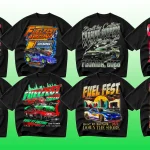
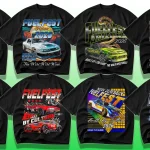
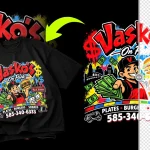
There’s a moment every streetwear fan knows. You scroll past a grainy photo of a bootleg T-shirt—the Nike swoosh replaced with a crying clown, the Starbucks mermaid smoking a cigarette, a luxury monogram scrambled into something deliciously wrong. Your pulse kicks up. It’s clever, it’s rebellious, it’s exactly the energy you want your clothing brand to capture. Then the anxiety hits: How do I make stuff like this without getting sued into oblivion?
I’ve stood exactly where you are. During the early days of building the design studio that would become Nixglow Studio, I watched friends launch clothing brands that burned bright for six months before a cease-and-desist letter shut them down. One lost his entire inventory in a trademark dispute. Another settled out of court for five figures. The common thread? They mistook raw irreverence for legal protection.
Here’s the good news: you can launch a bootleg-inspired clothing brand that pulses with underground grit while staying on the right side of copyright law. You just need to understand where the line actually is, how to dance around it, and when to build something entirely your own that feels just as electric. This guide will walk you through every step—from legal frameworks and design methodologies to branding and marketing—backed by real case law, industry wisdom, and lessons we’ve learned inside Nixglow Studio’s creative process.
The Bootleg Allure vs. The Legal Reality: A Critical Comparison
Before we start designing, we need to talk about what bootleg means and why most of what people call “bootleg” in streetwear is legally explosive. The table below will ground us in the differences that matter—because the difference between a viral hit and a lawsuit is often paper-thin.
Bootleg vs. Inspired: Navigating the Legal and Creative Line
| Aspect | Pure Bootleg | Legally-Inspired Remix |
|---|---|---|
| Core Approach | Directly copies or slightly alters a protected logo, character, or design without authorization. | Uses original artwork, parody, commentary, or public domain elements to evoke the feeling of bootleg culture. |
| Copyright Risk | Extremely high—unauthorized reproduction of a graphic, photo, or illustration. | Low if work is transformative or original; medium if relying on parody, which is a defense, not immunity. |
| Trademark Risk | High—using a recognizable brand name or logo in a way that could confuse consumers about source. | Manageable—avoiding consumer confusion, often by clearly differentiating brand identity and using disclaimers if parody. |
| Common Example | Selling a T-shirt with a slight variation of the Adidas trefoil and the word “Adios.” | Designing a three-leaf plant with a gritty punk twist and a slogan that satirizes athletic culture, without using Adidas’ actual marks. |
| Legal Outcome | Cease-and-desist, potential statutory damages up to $150,000 per work if willful, account forfeiture. | Usually defensible under fair use/parody doctrines, though still requires careful legal consideration. |
| Brand Perception | Edgy but risky; can be seen as unoriginal or a lawsuit magnet by investors and collaborators. | Viewed as clever, culturally literate, and legally sophisticated—attracts a smarter audience. |
This isn’t just a theoretical exercise. The streetwear graveyard is littered with brands that couldn’t navigate this table. Understanding the difference between tribute and theft is the foundation of everything that follows.
The Law You Can’t Afford to Ignore: Copyright, Trademark, and the Parody Lifeline
Let’s demystify the alphabet soup of IP law without the legalese that makes your eyes glaze over. Because if you’re going to run a clothing brand that flirts with existing iconography, you need to speak the language.
Copyright 101: What It Protects
Copyright attaches automatically to original works of authorship—graphic designs, illustrations, photographs, and certain textile patterns—the moment they’re fixed in a tangible form. If you redraw a famous cartoon character on a hoodie, even in your own hand, you’re creating a derivative work and you need permission from the rights holder. No permission? Infringement.
The penalties are no joke. Statutory damages in the U.S. range from $750 to $30,000 per work, and up to $150,000 for willful infringement (U.S. Copyright Office). That’s per design, not per shirt sold. A single bootleg graphic can bankrupt a small clothing brand overnight.
Trademark: The Brand Identity Trap
Trademarks protect words, logos, and symbols that identify the source of goods. Trademark infringement happens when your use is “likely to cause confusion” about who made the product. The classic test: would a reasonable consumer think your shirt is authorized by or affiliated with Nike? If your design uses the Nike swoosh—even warped—and sells clothing, a court might say yes. Trademark dilution is even more dangerous for famous brands, protecting them from uses that tarnish or blur their distinctiveness regardless of confusion.
Here’s an uncomfortable truth: many bootleg-inspired clothing brands collapse not because they’re criminally pirating graphics, but because their brand name or overall presentation makes consumers think there’s an official collaboration. If your label is “Fruity Loops” with a stylized cereal bowl and your hangtags mimic a famous cereal brand’s font, you’re wading into trademark hell.
The Parody Defense: Your Creative Shield (If Wielded Correctly)
This is where the magic happens. Parody—using an existing work to comment on or criticize it—can qualify as fair use and shield you from copyright infringement claims. The landmark Supreme Court case Campbell v. Acuff-Rose Music made clear that parody has strong fair use protection because it is transformative, adding new expression and meaning.
For clothing brands, the canonical example is the “Chewy Vuiton” dog toy case (Louis Vuitton Malletier S.A. v. Haute Diggity Dog, LLC). The court ruled that a plush dog toy shaped like a Louis Vuitton handbag but renamed “Chewy Vuiton” was a successful parody—it commented on the luxury brand by transforming it into something ridiculous. The key? It was obvious to consumers that it was not a Louis Vuitton product; it was a joke.
But parody is a defense, not a permission slip. You might still get sued, and you’ll need to prove your work is transformative, not merely a ripoff with a half-hearted twist. A bootleg-inspired clothing brand that wants to play in this sandbox must ensure the reference is unmistakably a commentary—political, cultural, or aesthetic—and that it doesn’t slide into consumer confusion.
Our team at Nixglow Studio regularly sits with emerging designers to audit their concepts against this framework. We’ve seen that the most legally resilient designs are those where the parody is so clear, and the original brand is so heavily transformed, that the conversation shifts from “Did they steal that?” to “What are they saying with it?”
Insert image: A side-by-side comparison infographic of a direct logo knockoff vs. a transformative parody design with commentary notes.
How to Build a Bootleg-Inspired Clothing Brand the Right Way: Key Insights
Now that we’ve established the guardrails, let’s get into the creative engine. The secret sauce of the most successful legally-inspired brands isn’t just avoiding lawsuits—it’s designing a visual language so potent that people forget they’re not wearing the real bootleg.
1. Start with Concept, Not a Logo
The biggest mistake I see? A founder falls in love with a bootleg design of the McDonald’s arches and tries to build a clothing brand around it. Instead, start with what you want to say. Are you critiquing consumerism? Celebrating internet trash culture? Reclaiming nostalgic corporate imagery for a queer, anti-capitalist lens? Your message is your legal armor. When the concept leads, the design choices become purposeful commentary—making a parody or transformative use argument far stronger.
Example: The brand Boot Boyz built its entire identity on Y2K corporate nostalgia, twisting Office Depot and Windows 95 aesthetics into clothing. It works because the commentary is the product. The corporate logos are a vehicle for satire, not the final destination. When I consult with clients at Nixglow Studio’s branding division, we spend hours on this concept layer before sketching a single graphic. It’s the foundation that keeps a clothing brand both creatively fertile and legally defensible.
2. Master the Art of Transformative Design
Transformativeness is the linchpin of fair use. The more you alter the original—adding new aesthetics, new meaning, new context—the safer you are. Here are some concrete techniques we use and recommend:
- Semantic Inversion: Take a logo’s visual structure but completely flip its meaning. A luxury monogram pattern becomes a background for anti-wealth slogans or a collage of AI-generated decay. The resulting image comments on the original, not merely duplicates it.
- Deconstruction and Collage: Fragment recognizable marks until they become raw material for a new composition. A Swoosh cut into geometric shards and reassembled into a protest fist. This sits comfortably in transformative territory.
- Hyper-Stylization in a New Context: Render a familiar fast-food mascot in brutalist, industrial linework and place it on a distressed work jacket with nihilistic text. The aesthetic jump must be radical enough to signal that this is a new creative work.
- Mashup and Juxtaposition: Combine two unrelated protected elements to create a new cultural statement—like a Tiffany & Co. blue box pattern merged with barcode prison aesthetics. The fusion is the commentary.
- Public Domain Hijacking: Use actual public domain assets (old advertisements, vintage illustrations) as your base, then subvert them. No original copyright holder means no infringement, yet the bootleg vibe is intact.
When we at Nixglow Studio help clothing brands develop capsule collections, we push for multiple rounds of transformation. If a design started as a Coca-Cola script, by round three it should be unrecognizable as Coca-Cola’s property and unambiguously yours.
3. Create Your Own Iconography That Feels Bootleg
The most sustainable path? Invent a visual system that feels like a bootleg without referencing any specific protected work. This is where you flip the script: design a faux-luxury logo from scratch, complete with a fictitious history, and treat it as a real brand. Consumer brains will still feel the illicit thrill of a “knockoff,” but you’ll own the copyright entirely.
Consider the phenomenon of “AI-generated luxury logos” or fictional corporate minimalism. Design a crest with a three-headed pigeon and the motto “Nihil Ultra.” Print it on heavyweight hoodies with peeling, distressed print techniques that mimic vintage flea market finds. The emotional payload of bootleg culture—the feeling of discovering something secret and subversive—comes through, with zero legal exposure.
At Nixglow Studio, we’ve developed a process called “Mythic Branding,” where we build a fictional legacy for a clothing brand’s logo set. We create lore, fake advertisements, and even a “corrupted” version of the logo that becomes the main mark. This approach not only sidesteps IP landmines but gives the brand a deep narrative that fans obsess over. The bootleg-inspired clothing brand becomes a world, not just a T-shirt.
4. Use Licensing and Collaboration (Yes, the Legal Way)
Want to use a real brand’s marks? Get permission. Seriously. The bootleg mystique makes licensing seem uncool, but some of the most iconic streetwear moments came from official collaborations that felt bootleg. Think Supreme’s work with everything from Louis Vuitton to Oreo. The key is finding brands that align with your subversive vision and pitching a partnership where the official collab deliberately leans into an unpolished, “unauthorized” aesthetic.
Approach smaller, cult-favorite companies whose brand would benefit from a gritty crossover. Draft a proposal that highlights the cultural capital and the mutual audience expansion. Legal licensing eliminates all guesswork and often comes with co-marketing support. It’s the smartest move for a clothing brand that wants to scale without fear.
Insert image: A mood board showing official collaborations that mimic bootleg energy—Supreme x LV, Gucci x Dapper Dan, etc.
5. Branding Yourself Out of the Danger Zone
Your clothing brand’s name, logo, and visual identity are your first line of defense. Even if your graphics flirt with parody, if your overall branding is confusingly similar to an existing label, you’re inviting a trademark lawsuit. Ensure your brand name is completely original and doesn’t incorporate any part of another trademark. Do a thorough search using the USPTO database before printing a single tag.
Your own logo should be distinctive, and your hangtags and packaging must clearly identify you as the source. Adding a small, visible disclaimer (e.g., “This is a parody work not affiliated with or endorsed by [Brand X]”) is not a magical shield, but it helps demonstrate good faith and lack of intent to confuse. We advise all our Nixglow Studio clients to weave the disclaimer into the design itself as a subtle graphic element—turning the legal necessity into part of the vibe.
6. Production and Distribution: Keep It Clean
Even the most legally bulletproof design can get you into hot water if you’re sloppy with production. When printing, ensure your manufacturer knows not to add any extra trademarked tags or packaging that could imply affiliation. Vet your print-on-demand platforms; some will automatically flag and remove designs that even remotely resemble protected IP.
Also, consider limited drops. Scarcity is baked into bootleg culture, and a smaller, quick-to-sell-out run reduces the likelihood of attracting attention from corporate legal teams. A clothing brand that moves 50 units of a parody design in a weekend is far less likely to be targeted than one sitting on 5,000 unsold tees in a warehouse.
A Step-by-Step Roadmap to Launch Your Bootleg-Inspired Clothing Brand
Let’s move from theory to action. Here’s the roadmap we walk through with every founder who joins the Nixglow Studio ecosystem.
Phase 1: Ideation and Legal Research (Weeks 1-4)
- Define Your Message: Write a one-page manifesto. What cultural commentary does your clothing brand make? Why must it exist?
- Audit Your Inspiration: List every reference you intend to use. Check copyright and trademark statuses. Identify which are public domain, which require transformation, and which are absolute no-go.
- Consult an Attorney: Not optional. Spend $500-1,000 on an IP lawyer to review your brand name, core designs, and parody strategy. The investment pays for itself the first time a cease-and-desist doesn’t arrive.
- Develop a Risk Matrix: Categorize each design: Low Risk (original/transformative), Medium Risk (strong parody but arguable), High Risk (do not print). Kill anything in high risk.
Phase 2: Visual Identity and Design (Weeks 4-8)
- Create Original Brand Assets: Finalize your clothing brand name, logo, color palette, and typography. Make them unmistakably yours. (Need help? Our brand identity services are built for this.)
- Design the Collection: Produce 8-12 pieces that execute your concept. Apply the transformative techniques above. For any parody piece, write down the specific commentary: “This design critiques Amazon’s labor practices by reimagining their smile logo as a fractured grimace.”
- Mockup and Test: Show the designs to people unfamiliar with your concept. Ask: “What brand does this remind you of?” If they consistently name the original trademark holder without recognizing the joke, head back to the drawing board.
Phase 3: Production, Launch, and Promotion (Weeks 8-16)
- Source Ethical Production: Find a manufacturer comfortable with your artistic vision. Use a contract that clarifies you own all copyrights and that they won’t reproduce your designs.
- Set Up Your Online Presence: Build a Shopify store, create Instagram and TikTok accounts. Film BTS content that explains the meaning behind each piece—this strengthens your parody narrative publicly.
- Drop Strategically: Use a “drop” model. Announce a limited release date. The scarcity and story-driven marketing emphasize the clothing brand’s artistic purpose over commercial scale.
- Engage with Community, Not Corporations: Build a Discord or subreddit. Foster a community that understands the satire. When your audience defends your work as cultural commentary, you’ve built a formidable layer of social proof.
The Unvarnished Truth: Lessons from the Trenches
I want to share a story that reshaped how I advise any clothing brand. A client came to us with designs that were brilliant parodies of a global sports brand—each logo transformed into ecological disaster symbols. The concept was airtight. But she also wanted to name her label with a twisted version of the sports brand’s tagline. That one word choice almost tanked the entire project. We negotiated for weeks, ultimately pivoting to a wholly original name while keeping the graphics. The brand launched without incident, got featured in Hypebeast, and is now in its third year.
The lesson? A clothing brand’s vulnerability often hides in the smallest details—a name, a font, a color combination that triggers trademark recognition. You must be meticulous. You’re not just a designer; you’re a cultural semiotician. That’s the mindset that separates the brands that survive from the ones that become cautionary tales on The Fashion Law.
Another insight: the most financially successful bootleg-inspired clothing brands aren’t the ones riding the coattails of a single corporate logo. They’re the ones that build their own symbolic universe. Bootleg by definition is about unauthorized duplication, but what you’re really selling is the aesthetic of the unauthorized — the frisson of contraband. You can manufacture that sensation entirely from scratch. The faux-logo, the distressed tag, the cryptic backstory—these tools are more powerful, and infinitely safer, than swiping a registered mark.
Protect Your Own IP: The Ironic Twist
Once your clothing brand gains traction, you become the one others might bootleg. It’s the circle of streetwear life. Secure your own copyright registrations for your original graphics and trademark your brand name and logo. That way, if someone straight-up rips your designs, you have legal standing. Plus, there’s a delicious poetic justice in a brand born from parody enforcing its own IP—use that narrative in your marketing. It deepens the cultural commentary.
U.S. copyright registration is relatively affordable and provides access to federal courts and statutory damages. Trademark registration gives nationwide priority. As your clothing brand grows, these protections are your moat, ensuring that while you play in the grey zone, nobody can steal your unique take.
Conclusion: The Future Belongs to the Legally Fearless
Starting a bootleg-inspired clothing brand without infringing copyright isn’t about diluting your edge—it’s about sharpening it with legal literacy. The scene rewards those who understand that true rebellion lies in outsmarting the system, not simply poking it with stolen symbols until you’re sued. Your voice, your commentary, your original art can hit harder than any unauthorized logo ever could.
At Nixglow Studio, we’ve watched a new wave of founders build clothing brands that are as legally robust as they are aesthetically unhinged. They’re crafting the next chapter of streetwear—one where the law is a canvas, not a cage. You can be part of it. All it takes is a concept worth fighting for, a design toolkit rooted in transformation, and the discipline to build something truly your own.
The ironic, culturally-charged clothing brand you’ve dreamed of is ready to be born. And this time, there’s no cease-and-desist at the finish line.
Ready to create a clothing brand that’s equal parts subversive and solid?
Dive deeper into our creative resources on the Nixglow Studio blog or check out our design services to get hands-on help with your brand identity, parody-safe graphics, and launch strategy.
Connect with the community and see raw design process on our Instagram and behind-the-scenes case studies on our YouTube channel. Let’s build something unforgettable—legally.